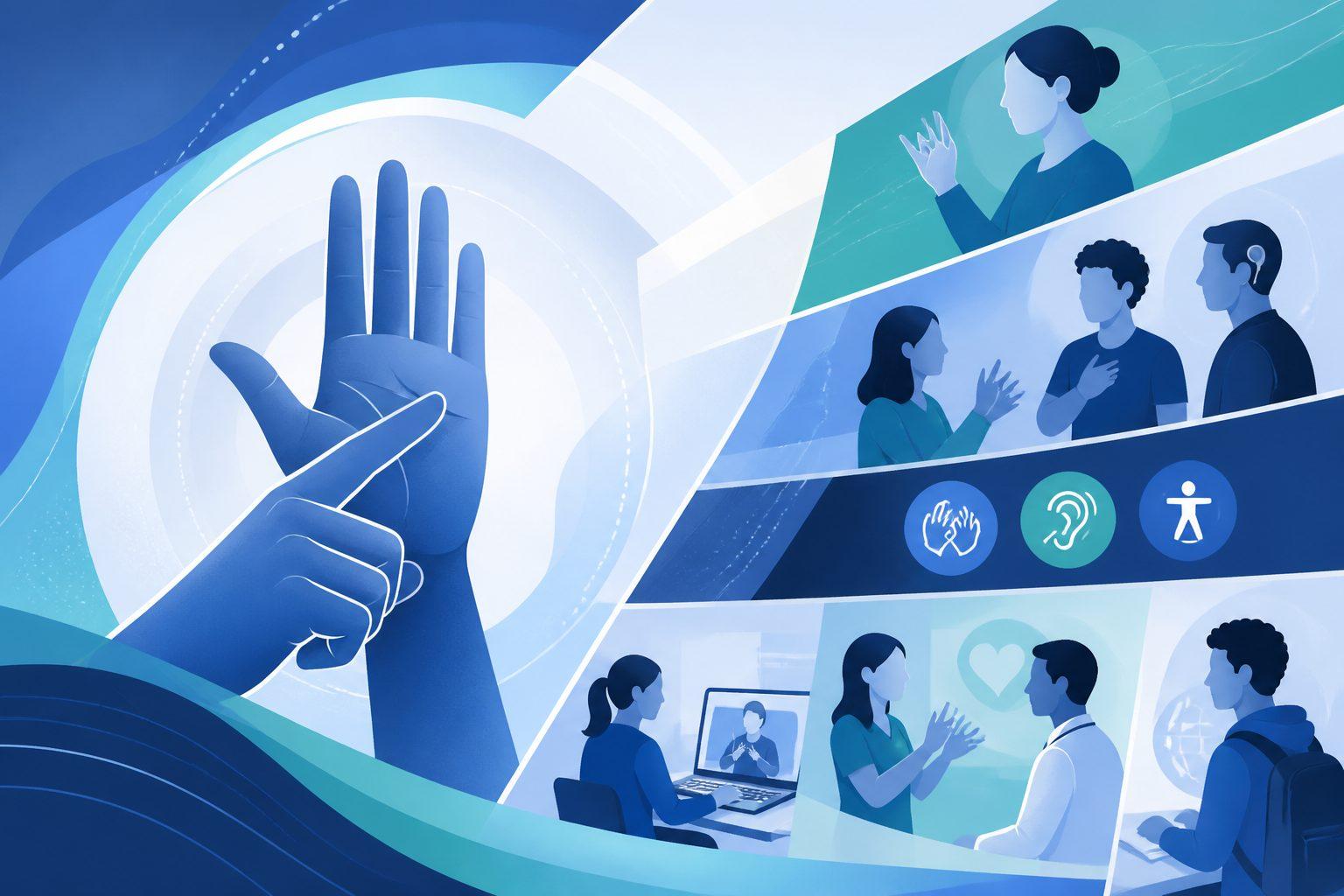
American Sign Language (ASL) is not just a means of communication, but a rich and vibrant language with its own grammar, syntax, and cultural significance. It is a vital part of accessibility for Deaf and hard-of-hearing (DHH) individuals, enabling equitable access to information, education, healthcare, employment, and community.
What is ASL?
ASL is a natural, visual language used primarily in the United States and parts of Canada. It relies on handshapes, facial expressions, and body movements to convey meaning. ASL is not a signed version of English. It has its own linguistic structure and rules.
Why ASL matters for accessibility
For many Deaf and hard-of-hearing individuals, ASL is a primary language, and accessible communication is a civil right. Ensuring ASL access helps people fully participate in daily life.
- Education: ASL in classrooms and campus services supports inclusive learning and language development.
- Healthcare: Qualified ASL interpreters help patients and providers exchange accurate information and make informed decisions.
- Digital content and events: ASL interpretation and high-quality captions improve access to media, livestreams, webinars, and public meetings.
Common misconceptions
- ASL is not universal. Countries have their own sign languages. For example, British Sign Language is different from ASL.
- Lipreading is not a substitute for language access. Only a portion of spoken English is visible on the lips, so ASL and other accommodations remain essential.
How to promote ASL accessibility
- Provide qualified interpreters in educational, legal, civic, and medical settings.
- Offer ASL interpretation for virtual and in-person events, along with accurate real-time captions.
- Build ASL into customer support, including video remote interpreting when appropriate.
- Train staff on how to request and work with interpreters and how to communicate respectfully with Deaf customers and colleagues.
- Learn basic ASL phrases to foster everyday inclusion, especially in front-line roles.
The cultural importance of ASL
ASL is not just a language, but a key part of Deaf culture, identity, and community. By embracing ASL, organizations can move beyond mere compliance and foster true inclusion. This recognition of Deaf people as linguistic and cultural minorities with equal rights to information and participation is a powerful step towards a more inclusive society.
Key takeaway
Accessibility means communication without barriers. Supporting ASL through interpreters, policy, technology, and personal learning helps create spaces where everyone can participate fully.